
How to Search Scott County Court Records
A Scott County court records search begins with one question. Which court made the file? Felony and civil trial cases live in Circuit Court. Divorce, estates, and land matters live in Chancery Court. Traffic tickets, DUI cases, and county ordinance charges run through Justice Court. The county FAQ at the Scott County government site routes each record type to the right office, which saves time before any search starts.
Mississippi runs a statewide e-filing and case system called Mississippi Electronic Courts, or MEC. It is the digital home for many trial court filings. Remote public viewing is account or subscription based, and the official portal was blocked by a firewall during research, so exact screens must be confirmed on the live system. When the online route stalls, the clerk's counter or a written request is the free fallback.
Before you search, gather a few basics. A full name, an approximate filing year, and a case number all speed up results. Then work the steps below in order.
- Name the case type. Match it to Circuit Court, Chancery Court, or Justice Court so the request lands in the right office.
- Try the online system. Visit Mississippi Electronic Courts for participating trial court cases. Remote viewing of full documents needs a registered account.
- Pay or look up a ticket. For Justice Court fines, use the county "Pay Tickets and Court Fines" link to the official nCourt page.
- Call the clerk who holds the file. Use the Circuit Clerk for criminal and civil litigation, or the Chancery Clerk for divorce, estate, and land records.
- File a written request if nothing else works. The Scott County public records form covers inspection, copies, and mailed or emailed delivery.
Remote MEC access starts with an account. The state hosts that step on the PAMEC online registration page, shown below.
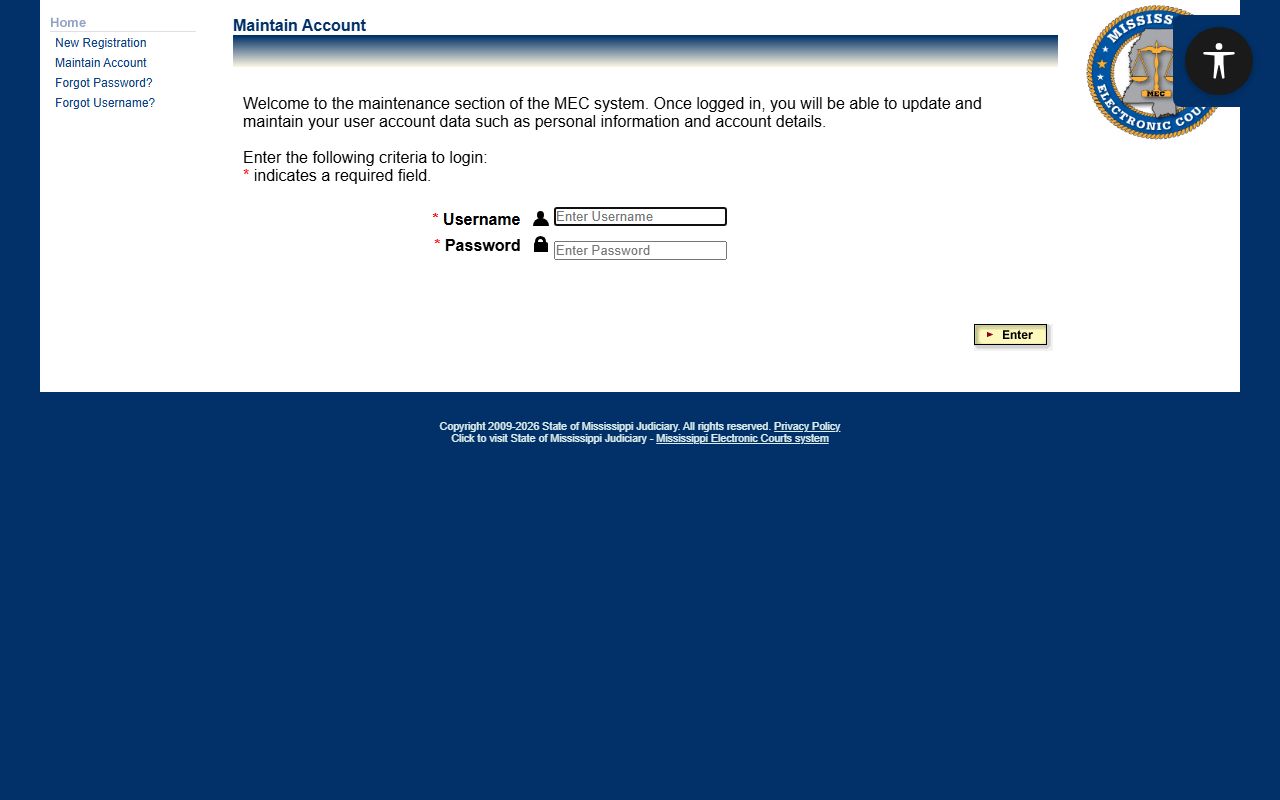
Once an account exists, a registered user can sign in to view or download filings the courthouse has placed in the system. People without an account can still read records at a courthouse terminal for free.
Scott County Court Records Search Fields
Most online case searches share a small set of input fields. The MEC and PAMEC system is no exception. The official field layout could not be inspected because the state pages were firewall and captcha blocked during research, so the table below lists the field types Mississippi public sources commonly describe. Confirm the live screen labels on the portal itself before relying on any one field.
| Field Label | Type | Required | Notes / Format |
|---|---|---|---|
| Account login / registration | Web account | Yes for remote public access | Remote viewing is account or subscription based; courthouse terminal is the free fallback. |
| Case Number | Text | No | Exact layout not inspectable; confirm format on the live MEC portal. |
| Party Name | Text | No | Search by plaintiff, defendant, petitioner, or respondent name. |
| Attorney | Text | No | Common in MEC and PACER style systems; not independently confirmed here. |
| Document view / download | Account action | Yes for remote viewing | Full document access is subscription based on the live portal. |
The statewide gateway for these searches is the Mississippi Judiciary's electronic court system, pictured here.
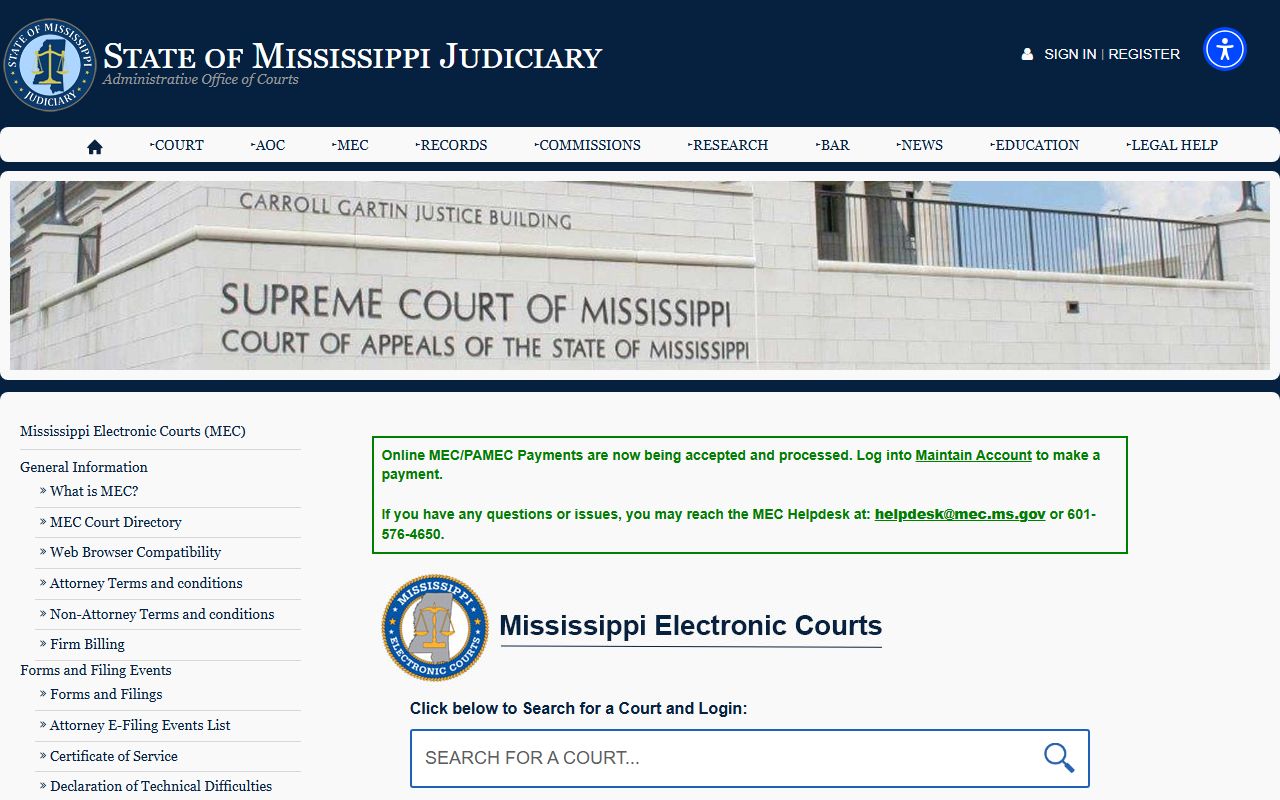
Because field labels can change, treat the table as a guide and verify each box on the Mississippi Electronic Courts site when you log in.
Which Office Holds Each Scott County Court Record
Scott County uses a split clerk structure, and that split decides where a record lives. The Circuit Clerk serves as clerk of both the Circuit and County Court. This office receives lawsuits, indictments, and motions, issues process, keeps judgments and executions, and stores marriage records. The county FAQ sends criminal history, civil litigation, and tax lien requests here. Felony arrest-to-charge files often begin in Justice Court, then move up, since all felony cases are first heard in Justice Court for the initial appearance.
The Chancery Clerk is a separate office. It records deeds, mortgages, liens, and military discharges, keeps Board of Supervisors minutes, and serves as clerk of the Chancery Court. Divorce, estate, guardianship, and land title records flow through this office. Justice Court keeps traffic, DUI, and county ordinance files. The routing list below mirrors the county's own guidance and helps you point a request at the correct counter.
- Criminal history, felony and civil litigation, judgments, executions, and tax liens go to the Circuit Clerk.
- Divorce, estates, guardianships, conservatorships, land records, and board minutes go to the Chancery Clerk.
- Traffic citations, DUI cases, and county ordinance charges go to Justice Court.
- Marriage licenses and marriage records are issued and kept by the Circuit Clerk.
- Youth Court matters are confidential and are not part of an ordinary public search.
For ticket and fine matters that route through Justice Court, the dedicated Scott County traffic court records page covers citation lookups and payment in more depth.
Types of Scott County Court Records
The county's courts produce several distinct record families. Circuit civil records include complaints, answers, motions, summonses, subpoenas, orders, judgments, executions, and docket entries. Circuit criminal records hold indictments, felony pleadings, jury trial materials, judgments, sentencing orders, and any appeal entries. The full criminal case file is detailed further on the Scott County criminal court records page.
Chancery Court adds the family and property side. Divorce decrees, custody orders, property division, adoptions, and alimony rulings sit here, along with estates, guardianships, and conservatorships. Justice Court holds the high-volume lower files: traffic tickets from the Highway Patrol and the Sheriff's Department, plus Public Service, Gaming, Fishing, and Marine Reserve tickets. City-issued tickets may instead sit in a Municipal Court run by the city that wrote them.
Some records carry tight limits. Youth Court delinquency, abuse, and neglect files stay confidential. Mental health commitment matters in Chancery Court hold medical detail and are not ordinary public civil files. Sealed and expunged records drop out of public view entirely.
What Scott County Court Records Show
A Circuit Court case file is built from a standard set of fields. Knowing the field names helps you read a docket or ask the clerk a precise question. The table below maps each common field to what it tells you. Justice Court files use a lighter version centered on the citation, while Chancery files swap in petitioner, respondent, and the chancellor's decrees.
| Field | What It Shows |
|---|---|
| Case Number | The unique court ID assigned when the case is filed. |
| Filing Date | The day the case was opened with the clerk. |
| Court | Which court holds the case, such as Circuit, Chancery, or Justice. |
| Case Type | The nature of the matter, civil, criminal, or domestic. |
| Parties | Plaintiff and defendant, or petitioner and respondent. |
| Attorneys | Counsel listed for each side. |
| Pleadings and Motions | Filed documents asking the court to act. |
| Docket Entries | A dated log of every step in the case. |
| Disposition | The final outcome, such as dismissed, guilty, or judgment entered. |
| Judgment or Sentence | The money award, order, or criminal penalty imposed. |
Justice Court records add their own fields: citation number, defendant, charge, issuing agency, court date, fine amount, plea, payment status, and any warrant or failure-to-appear flag. The county nCourt overlay notes that a ticket issued less than seven to ten days ago may not yet appear in the system. A Scott County court docket shows the dated activity log for an active case.
Public Access Laws for Scott County Court Records
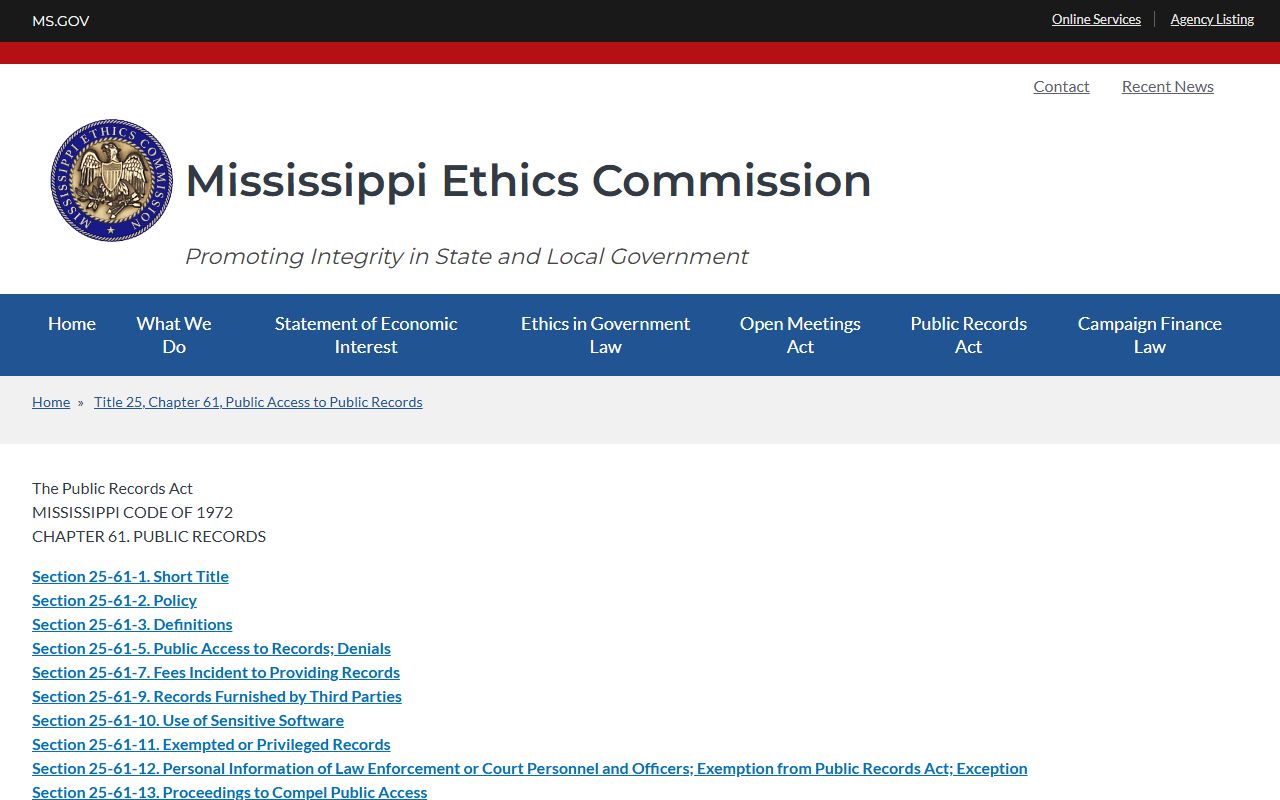
Mississippi treats most government files as open. The Public Records Act of 1983, found in Title 25, Chapter 61 of the state code, makes records available for inspection by any person unless a law exempts them. Section 25-61-1 sets that baseline, and the full policy is published by the Mississippi Ethics Commission. Section 25-61-5 requires each public body to adopt written request procedures, which Scott County meets through its printed request form.
The Mississippi Public Records Act is the legal backbone for any Scott County court records request.
Fees and redaction also have statutory roots. Section 25-61-7 lets an agency charge actual search, review, copy, and mailing costs. Section 25-61-9 allows a record with exempt material to be redacted so the rest can still be released. Together these rules let the clerk hand over a public file while protecting the parts the law shields.
Note: Open access is the default in Scott County, but sealed, juvenile, adoption, and mental-health records stay closed even when the rest of a file is public.
Fees and Timelines for Records Requests
When a record is not online, the Scott County public records form is the universal route. Mark the request clearly as a "Public Records Request" and send it to the Chancery Clerk, who serves as the public-records officer for the Board of Supervisors, at PO Box 630, Forest, MS 39074. The form lets you inspect records in person or order copies, and choose mail, in-person, or email delivery. The county may charge for search time even when no responsive record is found.
The state's broader online services hub points residents toward official records tools and payments.
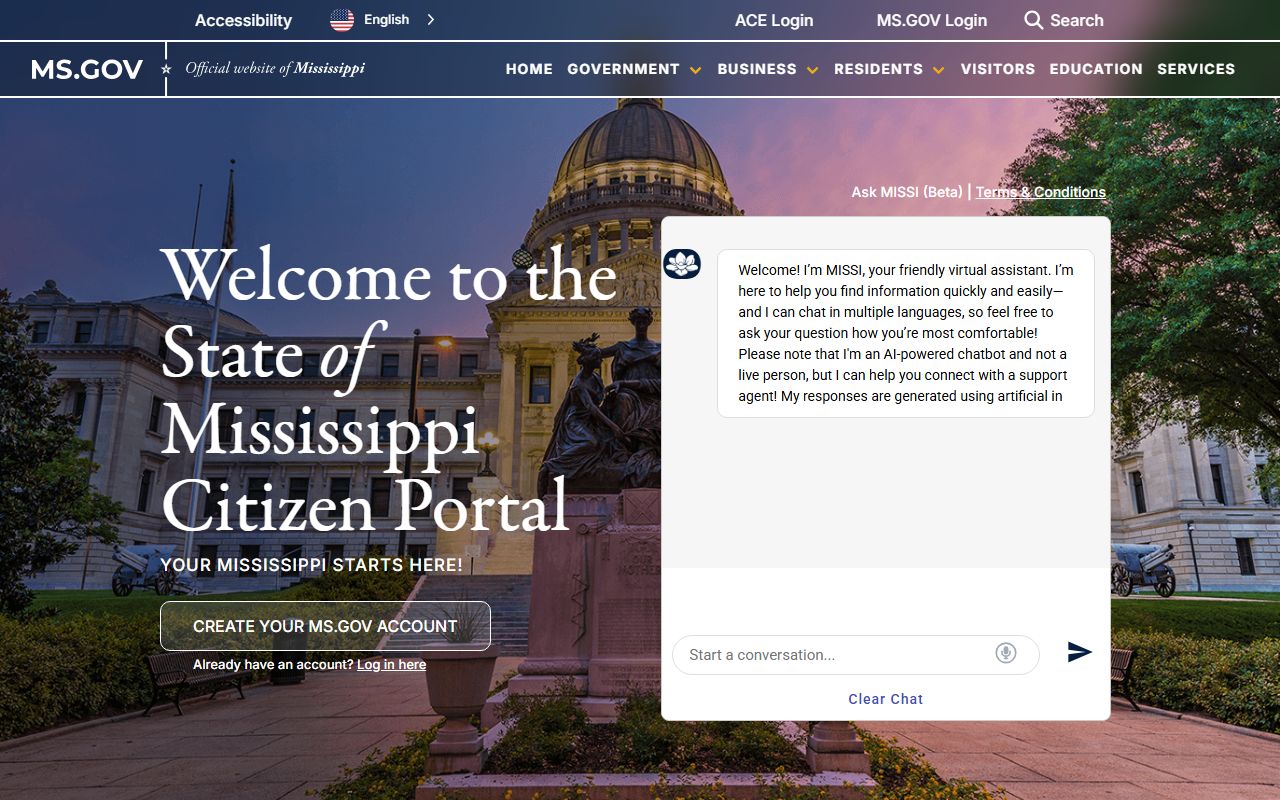
The Mississippi citizen portal at MS.gov links to motor vehicle records, license tools, and other state services that sit alongside county court files. The fee schedule printed on the county form is set out below.
| Item | Cost |
|---|---|
| Labor for research and processing | $20.00 per hour |
| Copies | $0.50 per page |
| Non-standard records | Actual cost of materials and equipment |
| Delivery | Actual cost, such as postage |
| Legal review and redaction | Actual attorney time spent |
Timing is set too. The county aims to produce records within 7 business days of the request. If that is not possible, it gives a written explanation. In any event, records are provided within 14 business days unless both sides agree otherwise, subject to legal exemptions.
Sealed and Confidential Scott County Court Records
Not every court file is open. Scott County Youth Court handles delinquency, children in need of supervision, and abuse or neglect cases. The Mississippi Bar explains that youth court records are generally confidential, and a court can order them sealed when the youth turns 20 or when a case is set aside or dismissed. The Mississippi Bar juvenile-rights page covers these limits, which rest in part on Section 43-21-263 of the state code.
Sealed and expunged adult records also drop from public view. Expunction matters most for dismissed charges, acquittals, non-convictions, and certain eligible convictions under Section 99-19-71. The clerk cannot erase a record on request. The proper route is a petition in the court that handled the case, and a judge must sign an order before any agency removes the file. Adoption and mental-health commitment records are restricted as well, since they hold sensitive personal and medical detail.
To view a sealed file, a person usually needs party status, statutory authority, or a court order. A clerk can supply filing information but cannot give legal advice. Expunction eligibility is fact-specific, so confirm the rules with the court of jurisdiction before filing.
In-Person Court Record Requests
For older or non-digitized files, the clerk's counter remains the most reliable option. The Scott County Courthouse sits in downtown Forest, the county seat. Bring the case number or full party name and an approximate year. Official sources do not publish courthouse hours, parking, or security rules, so call the office first to confirm before you travel. The Circuit Clerk is the contact for Circuit Court records, marriage licenses, judgments, and jury questions.
Scott County Circuit Clerk
Rebecca "Becky" Gray
PO Box 371
Forest, MS 39074
601-469-3601
Call to confirm hours
The Chancery Clerk handles divorce, estate, guardianship, and land records, and coordinates public-records requests for the Board of Supervisors. Justice Court answers traffic, DUI, and ordinance questions at 601-469-4555, where Betty Odom serves as clerk. Matching the office to the record before you visit keeps the trip short and the request on track.